

Diagnose.Clear the path.Follow through. — Dr. Mohammad Ali Monadi
Urologist and Urologic Surgeon Tabriz
From stones and flank pain to prostate concerns and male infertility. The cause comes first, then the options.
This picture is only one example. Every stone is treated differently, and most small stones do not need this.
Ask your urinary questions openly.
Sudden flank pain, blood in the urine, a PSA result or a semen analysis: many people are left alone with these and search online before they pick up the phone. Dr. Mohammad Ali Monadi works in Tabriz in urology, the field of the kidneys and the urinary and genital tracts. This site explains in plain language what each problem means, what checking it involves and when not to wait for an appointment. Some of these topics are hard to talk about; here you do not have to.
More about the doctorWhat is worrying you?
Tap what you are facing to reach the matching page. This list is not a diagnosis; it only points you to the right page.
- Sudden flank pain
- A stone that has not passed
- Blood in the urine
- A high PSA result
- Getting up at night or a weak stream
- A semen analysis result
- Not conceiving
- Recurrent urinary infections
- Urine leakage
- A stent or catheter
Flank pain with fever or chills, being unable to pass urine, sudden severe testicular pain, or blood with clots that blocks the flow of urine cannot wait for an appointment. In an emergency, call 115 (Iran's emergency number). When should I call urgently?
From kidney stones to the prostate, in plain language.
Every urinary problem has its own cause and course. These pages explain what the problem is, how it is checked and what the options are in general. Your diagnosis and treatment plan are decided by the doctor after an examination.
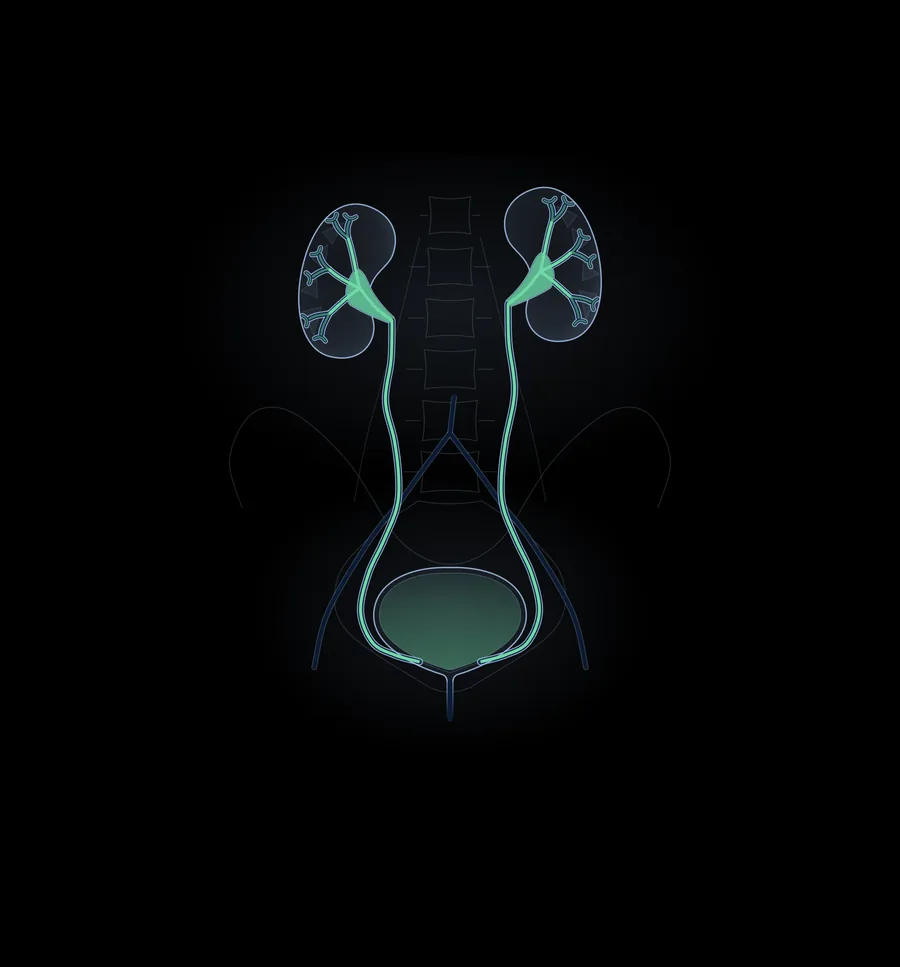
Kidney and ureteral stones
Colicky pain that spreads from the flank to the groin or testicle is often caused by a stone. This page explains how small stones pass on their own, which signs mean you should not wait, when other treatments come in, and how to lower the chance of the next stone.
Read moreProstate: benign enlargement and PSA
Getting up at night to urinate, a weak stream, or a high PSA result brings many middle-aged and older men to the clinic. This page explains what an enlarged prostate is, how it is assessed, what the treatments do to urination, erections and ejaculation, and how to read a high PSA.
Read moreMale infertility: semen analysis and varicocele
Not conceiving is a couple's issue, not one person's fault. This page explains when to start an evaluation, what a semen analysis measures and what the numbers mean, where varicocele fits in, and how the work-up of the man and his partner goes together.
Read moreBlood in the urine, recurrent infections and leaking urine
Burning when you urinate, bloody urine, an infection that keeps coming back and leaking urine can each be hard to bring up with a doctor. This page explains what can cause each symptom, which ones should not be delayed, and what the assessment and treatment usually involve.
Read moreKidney transplant: what patients and families should know
A kidney transplant is a treatment for kidney failure, not a definitive cure for the underlying disease. This page is for information only: what a transplant is, who may benefit, what happens after the operation, and why urinary tract follow-up matters after a transplant.
Read more
From the first visit to keeping it from coming back
Not every urinary problem needs an operation. Sometimes watching is enough, sometimes medicine, sometimes a minimally invasive procedure or surgery. At each step you know what comes next and why.
- Step 1 of 5.
First, your story
When the symptoms began, which medicines you take, and whether you have had stones or surgery. Bring earlier test results and scans.
- Step 2 of 5.
Examination and urine test
A urine test shows whether there is blood or a sign of infection. Other tests are ordered if they are needed.
- Step 3 of 5.
Imaging, if it is needed
Depending on the problem, an ultrasound or CT scan shows where it is and how large it is. Not every patient needs all of these.
- Step 4 of 5.
Weighing the options together
Watching, medicine, a minimally invasive procedure or surgery. You hear the benefits and risks of each and decide together.
- Step 5 of 5.
Follow-up and prevention
After treatment, the follow-up visit and tests are set. If the problem was a stone, you also go over ways to lower the chance of another one.
You are not alone on this path.
Treatment is more than visits. Sometimes a CT or ultrasound, tests, getting medicines and follow-up are needed too. The support team coordinates these so that you and your family spend less time chasing them.
Imaging and ultrasound
Quick appointments and results, second reads of images, and reports and images sent directly to the treating doctor.
Medical diagnostic laboratory
Quick appointments and results. The support team arranges the sampling and the follow-up of test results.
Pharmacy and specialty medicines
Help getting specialty medicines, with quick delivery for Tabriz residents.
Fast referral to specialists and sub-specialists
If you need another doctor, the support team books the appointment and refers you.
Rehabilitation and wellbeing
Quick appointments and referrals to rehabilitation and health specialists, arranged by the support team.
Specialist treatment and rehabilitation at home
When getting out is hard, part of treatment and rehabilitation comes to you.
Services marked "Free" on the support form are provided at no cost.
Simple answers to the first questions.
Will my kidney stone pass on its own?
Small stones often have a chance of passing, but not all do. The size and position of the stone matter, and imaging shows them. If the pain comes with fever or chills, or you cannot pass urine, do not wait for it to pass; seek care at once.
Which stones need a procedure or another approach?
When a stone does not pass, blocks the flow of urine, comes with an infection, or the pain cannot be controlled with usual measures, other options have to be considered. The choice depends on the size and position of the stone and on your condition, and it is made together with the doctor.
How long does a stent stay in?
A stent is temporary, and the doctor tells you how long based on your situation. Note the date it was placed and follow up about its removal or exchange. Some burning, frequent urination and pink urine are common during this time; with fever, chills or being unable to pass urine, do not wait, and see a doctor or go to an emergency department at once.
Does a high PSA mean cancer?
Not necessarily. A benign enlarged prostate, an infection and even some things done before the test can raise the number. PSA is a signal, not a diagnosis. Screening with PSA is a shared decision, so discuss your age, family history and own preferences with the doctor.
Does an enlarged prostate harm sexual function?
Raise this with your doctor. What is clear is that some treatments can affect sexual function or ejaculation. Before choosing any treatment, ask about these effects so you can decide with full information.
What does a semen analysis result mean?
One analysis alone is not the full picture, because results vary from one sample to the next. Sometimes the test has to be repeated. Infertility is a couple's issue, and both partners are assessed together. The laboratory tells you how to prepare for the sample, and the preparation guide covers it.
Is blood in the urine dangerous?
The causes range from simple ones, such as a stone or an infection, to more serious ones. Because the colour of the urine cannot tell you the cause, blood in the urine needs checking, even without pain and even if you saw it only once. There is no need to panic, but there is no point in delaying either.
What should I bring to the first visit?
Urine and blood test results, ultrasound or CT reports and the images themselves, a PSA or semen analysis result if you have one, a list of the medicines you take and notes on your symptoms. If something is missing, come anyway.
When should I go to the emergency room?
Flank pain with fever or chills, being unable to pass urine, sudden severe testicular pain, blood with clots and being unable to urinate, a painful erection that will not go away, and colicky pain in someone with only one kidney cannot wait for an appointment. Call 115. The full list is in the patient guide.
Do you work with insurance?
The list of insurers will be announced soon.
Do you offer online follow-up?
Details will be announced once the doctor confirms them.
These answers are general and do not replace your doctor's advice for your situation.
The first step, a calm conversation.
Go to the booking page or talk to support. Either way, we are with you.
Support number